Discover Sudan
A Cradle of Ancient Civilizations
Sudan, the historic land of ancient Nubia and the Kingdom of the Black Pharaohs, boasts a wealth of archaeological treasures and diverse tourist attractions.
In the capital, Khartoum, the National Museum showcases a remarkable collection of ancient Nubian artifacts, including historic temples rescued by UNESCO and monumental statues of the Black Pharaohs. Along the scenic banks of the Nile in northern Sudan, visitors can explore the sacred Jebel Barkal and its historic temples.
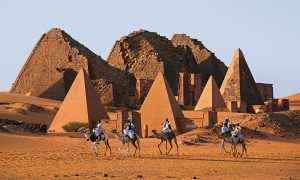
Further inland, the spectacular Pyramids of Meroe rise above the golden sand dunes, featuring over 40 sharply defined pyramids and intricately decorated funerary temples. Together with the nearby archaeological sites of Musawwarat es-Sufra, the Temple of Apedemak, and the Roman Kiosk, these landmarks stand as a timeless testament to Sudan’s rich and vibrant history.
Wild Life
Location: Eastern Sudan, along the Ethiopian border (approximately 450 km southeast of Khartoum, between the Dinder and Rahad rivers).
Status: Established in 1935; designated as a UNESCO Biosphere Reserve in 1979.
Biodiversity: A major sanctuary featuring diverse ecosystems, from northern thorn-bush savanna to southern woodlands and riverine forests.
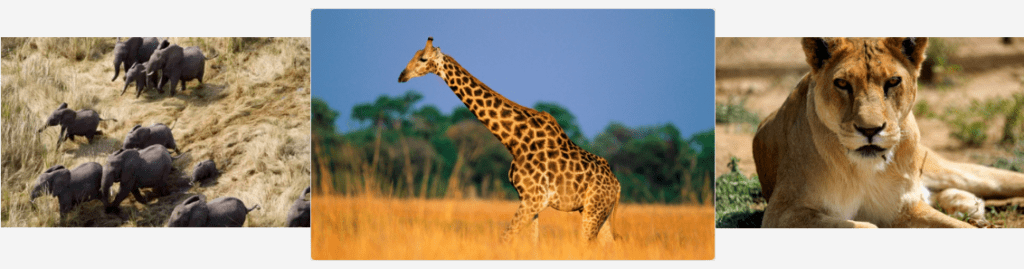
Wildlife: Home to iconic mammals (lions, elephants, leopards, cheetahs, and various antelopes), reptiles, fish, and a critical flyway for migratory birds between Eurasia and Africa.
Access: Accessible by road from Khartoum, with official trips arranged via the park headquarters.



The Pyramids of Meroe
Location: Northern Sudan, near the town of Shendi (approximately 200 km north of Khartoum, situated on the east bank of the Nile River).
UNESCO Status: Designated as a UNESCO World Heritage Site in 2011 as part of the “Archaeological Sites of the Island of Meroe.”
Historical Significance: Served as the capital of the ancient Kingdom of Kush (Meroitic Period) from the 4th century BC to the 4th century AD. It was a powerful center of trade, ironworking, and culture.
Architectural Features: The site contains over 200 steep-sided royal pyramids, which served as burial sites for Kushite kings and queens. They are renowned for their unique, narrow design and distinct red-sandstone construction.
Access & Tourism: Accessible by road via the Khartoum-Atbara highway, offering visitors a profound journey into one of Africa’s oldest civilizations.


The Red Sea of Sudan & Sanganeb National Park
Location: Eastern Sudan along the Red Sea coast. Sanganeb Atoll is located approximately 30 km northeast of Port Sudan.
UNESCO Status: Sanganeb Marine National Park (along with Dungonab Bay and Mukkawar Island) was designated as a UNESCO World Heritage Site in 2016 for its outstanding universal value.
Marine Biodiversity: Renowned for having some of the most pristine coral reef systems in the world, hosting over 300 fish species, dolphins, sharks, and marine turtles.
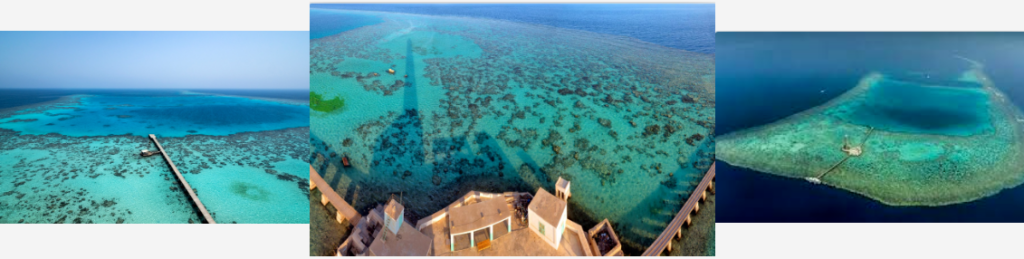
Unique Features: Sanganeb is the only atoll (a ring-shaped coral reef) in the Red Sea, featuring a historic 19th-century British lighthouse.
Access: Accessible by boat from Port Sudan, making it a world-class destination for diving and marine research.


The Capital & The Confluence of the Two Niles
Location: Central Sudan; situated at the historic geographic junction where the White Nile and the Blue Nile meet to form the main Nile River.
The Confluence (Al-Mogran): One of the world’s most unique natural phenomena, where the light clay-colored waters of the White Nile merge with the dark, silt-rich waters of the Blue Nile.
Historical Significance: Established in the early 19th century, Khartoum grew into the political, economic, and cultural heart of Sudan due to its strategic river location.
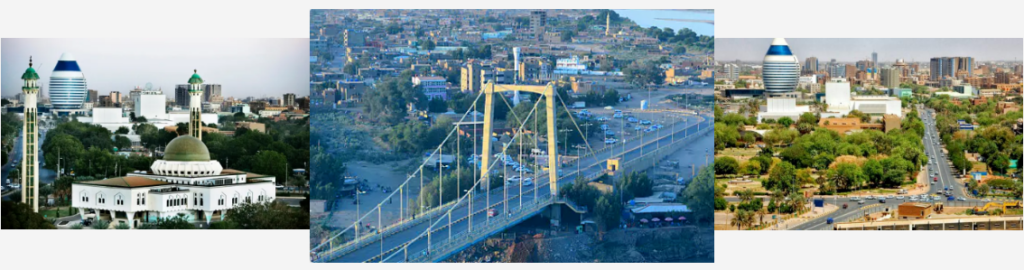
Key Landmarks: The Mogran Garden, Tuti Island, and the panoramic views from the Nile bridges, showcasing the distinct color contrast of the two rivers.
Access & Tourism: Centrally connected by international flights and federal roads, offering boat tours and cultural excursions around the historic riverbanks.