 Helps & Tips
 Language

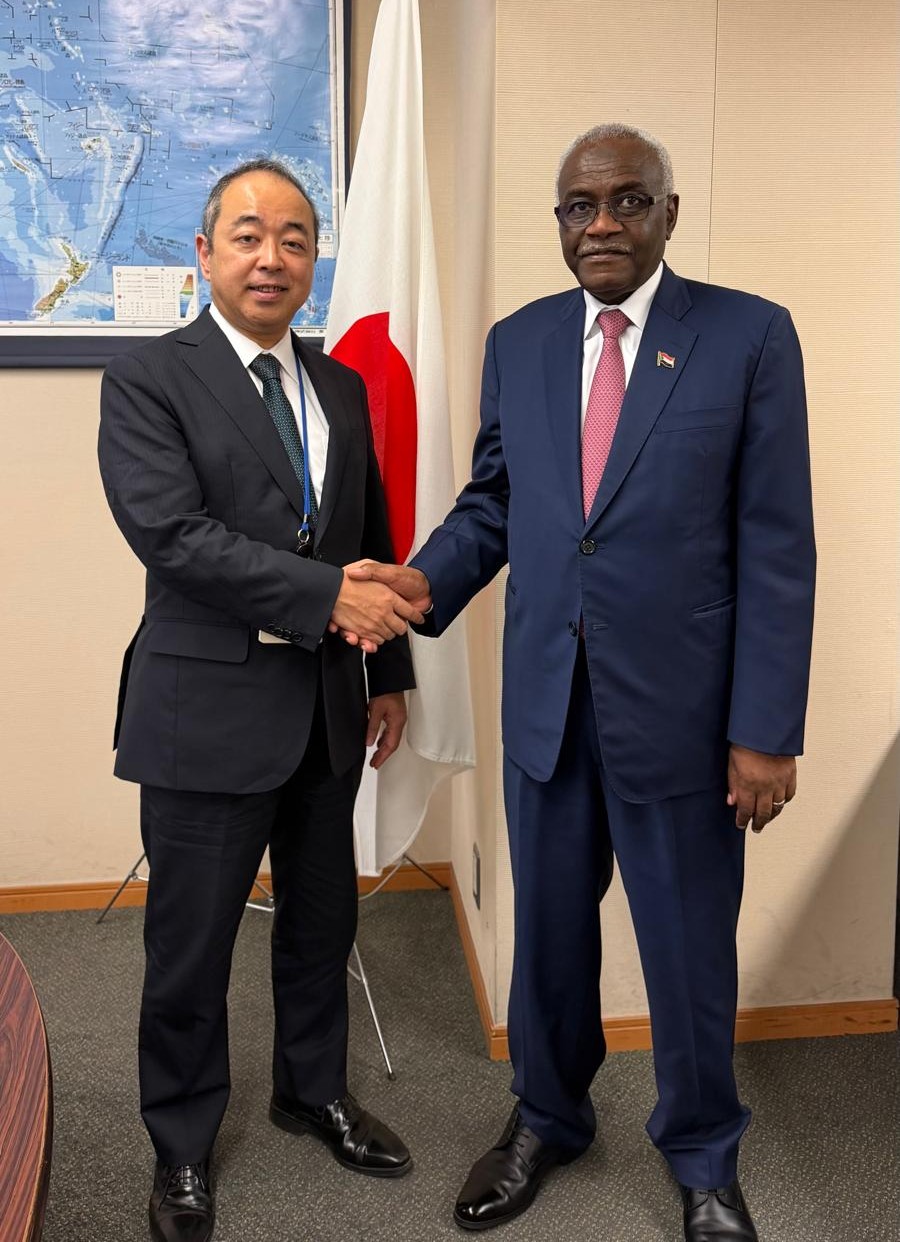


TOKYO – On Monday, August 3, 2026, H.E. Mr. Elrayih Hydoub, Ambassador Extraordinary and Plenipotentiary of the Republic of the Sudan to Japan, was received at the Ministry’s headquarters in Tokyo by H.E. Mr. IMAFUKU Takao, Assistant Minister and Director-General for International Cooperation at the Ministry of Foreign Affairs of Japan.
The meeting was attended by Ms. Matsuura Naoko, Director of the Country Assistance Planning Division for Africa, the Middle East, and Europe; Ms. Aoyama from the International Cooperation Bureau; and Second Secretary at the Sudanese Embassy, Ms. Basmalah Montaser.
High-Level Discussions on Development and Humanitarian Aid
During the meeting, both sides explored avenues to bolster developmental and humanitarian cooperation. Ambassador Hydoub expressed the sincere gratitude and appreciation of the government and people of Sudan for Japan’s continuous support across various sectors, highlighting its impactful development projects and substantial humanitarian assistance.
Briefing on Khartoum Security and Reconstruction Efforts
Furthermore, His Excellency provided a comprehensive briefing on the recent political and security developments in Sudan, emphasizing the federal government’s return to operational duties from Khartoum, the reopening of Khartoum International Airport, and the initiation of government reconstruction efforts in war-affected areas. Ambassador Hydoub underlined Sudan’s need for the support of friendly nations, most notably Japan, to reinforce governmental reconstruction endeavors and rehabilitate infrastructure systematically damaged by militia conflict.
Japan Welcomes Security Improvements and Pledges Support
For his part, the Assistant Minister and Director-General for International Cooperation confirmed that the Ministry has received official reports attesting to the improved security situation in Khartoum and central Sudan. He expressed his hope for widespread peace and stability across all regions of Sudan, which would facilitate the implementation of an expanded scope of development projects and humanitarian aid.
The two parties also discussed coordination regarding the approval of several development, healthcare, and infrastructure projects, in addition to academic cooperation, the rehabilitation of museums, and capacity-building initiatives.
Commitment to Future Coordination
In conclusion, both sides reaffirmed the paramount importance of continued coordination and consultation in the upcoming period to serve mutual interests and advance stability and development efforts in Sudan.